
Cave Creek Lawn Edging Services
Choose our expert lawn edging to give your landscape a polished, professional look that enhances curb appeal and makes maintenance a breeze—experience the difference of precision craftsmanship and durable results.
Get a Free QuoteOur Cave Creek Landscaping & Yard Care Services
When to Schedule Lawn Edging in Cave Creek, Arizona – Seasonal Guide
In Cave Creek, Arizona, the timing of your lawn edging can make a significant difference in both curb appeal and landscape health. With our unique Sonoran Desert climate, optimal lawn edging is typically scheduled in early spring or late fall, when temperatures are milder and the risk of extreme heat or frost is minimal. Neighborhoods near Spur Cross Ranch and the Cave Creek Regional Park often experience microclimates—such as increased shade from mature mesquite and palo verde trees—that can influence the best time for edging.
Local environmental factors like low annual precipitation, sandy or rocky soils, and the potential for drought mean that lawns in Cave Creek require careful attention to avoid stress. Scheduling edging before the summer monsoon season helps prevent soil erosion and keeps borders crisp, while avoiding the hottest months reduces the risk of damaging turf. For more information on local landscaping guidelines, visit the Town of Sudbury's resource page.
Local Factors to Consider for Lawn Edging in Cave Creek
- Tree density and shade coverage, especially in areas like Rancho Mañana
- Soil composition (sandy, rocky, or clay-heavy)
- Annual precipitation and drought risk
- Frost dates, particularly in higher elevations
- Terrain slope and drainage patterns
- Municipal restrictions or water use guidelines
Benefits of Lawn Edging in Cave Creek
Enhanced Curb Appeal
Weed Growth Prevention
Defined Landscape Borders
Low Maintenance Solutions
Increased Property Value
Professional Installation Expertise
Cave Creek Lawn Edging Types

Brick Lawn Edging
-
Metal Landscape Edging
-
Plastic Lawn Borders
-
Natural Stone Edging
-
Concrete Curbing
-
Wood Landscape Edging
-
Rubber Lawn Edging
Our Lawn Edging Process
Site Evaluation
Marking Edges
Cutting the Edge
Debris Removal
Final Inspection
Why Choose Cave Creek Landscape Services

-
Cave Creek Homeowners Trust Us
-
Expert Lawn Maintenance
-
Reliable Irrigation Solutions
-
Comprehensive Weed Control
-
Competitive Pricing
-
Professional Team
-
Satisfaction Guarantee
Coordinating Lawn Edging Services with Cave Creek's Public Works and Engineering Departments
Lawn edging along public-facing frontages in Cave Creek requires awareness of the town's right-of-way maintenance standards and drainage infrastructure. The Town of Cave Creek Public Works Department oversees streets, rights-of-way, drainage systems, and municipal landscaping, making it the primary point of coordination when edging work occurs near curbs, sidewalks, or public drainage inlets. Residents and property managers should confirm right-of-way boundaries before performing mechanical edging adjacent to town-maintained surfaces, as blade contact with utility lines, irrigation sleeves, or drainage structures can cause costly damage.
- Edging debris such as soil, grass clippings, and decomposed granite must be kept out of curb inlets and storm drainage channels
- Any edging work that alters grade or drainage flow near a wash or retention basin should be reviewed with the town's Engineering Department
- Green waste generated from edging should be collected on-site rather than swept into the street or gutter
Cave Creek Public Works Department
Official Website: Cave Creek Public Works
Cave Creek Engineering Department
Official Website: Cave Creek Engineering
How Cave Creek's Desert Soils and Low-Desert Heat Affect Lawn Edging
Cave Creek sits within the Phoenix metro low-desert region, classified under USDA Hardiness Zone 9b, where summer temperatures routinely exceed 110°F and soils are predominantly alkaline sandy loam interspersed with caliche layers and decomposed granite. These conditions directly influence how lawn edging is performed and maintained. Bermudagrass, the dominant warm-season turf in Cave Creek, produces aggressive stolons and rhizomes that rapidly encroach across hardscape borders, requiring more frequent edging cycles than cooler climates demand.
- Caliche and rocky substrate can dull or damage edging blades, requiring operators to assess subsurface conditions before setting blade depth
- Reflected heat from block walls, pavers, and concrete walkways accelerates turf desiccation along edges, making irrigation overspray management critical
- Alkaline soils (pH commonly above 7.5) contribute to salt crust formation along turf-hardscape transitions, which can obscure clean edge lines
- Monsoon runoff between July and September can erode exposed soil along freshly cut edges, particularly on sloped lots or properties adjacent to washes
The University of Arizona Cooperative Extension provides region-specific guidance on bermudagrass growth patterns and maintenance timing relevant to edge management in low-elevation Arizona communities.
Navigating Cave Creek's Zoning and Stormwater Compliance for Lawn Edging
While routine lawn edging on private residential property does not typically require a permit in Cave Creek, property owners should be aware of several regulatory considerations that may apply depending on site location and scope. Properties adjacent to natural washes, flood-control channels, or designated open space may be subject to additional review through the town's Development Services division if edging work alters drainage patterns or disturbs stabilized surfaces.
- Edging debris and soil must not be discharged into storm drains or washes, consistent with Arizona DEQ stormwater requirements and federal Clean Water Act provisions
- Properties within HOA-governed subdivisions may have additional landscape maintenance standards that specify edging frequency or appearance along common-area boundaries
- The town's Conservation Resources program encourages water-efficient landscape practices, including managing irrigation overspray that often results from poorly maintained turf edges
Residents should verify current requirements with the appropriate town department before performing edging work that extends into rights-of-way or alters grade near drainage infrastructure.
Cave Creek Development Services
Official Website: Cave Creek Development Services
Timing and Methods for Lawn Edging Around Cave Creek's Monsoon and Heat Cycles
Professional lawn edging in Cave Creek follows seasonal timing dictated by bermudagrass growth cycles and extreme heat exposure. The Turfgrass Maintenance Guide for Low Elevation Arizona from the University of Arizona provides foundational guidance on turf management that directly informs edging schedules.
- March through October represents the primary edging season, coinciding with active bermudagrass growth; edging frequency during peak summer months (June through August) may need to increase to every one to two weeks due to rapid stolon extension
- Mechanical blade edging along concrete curbs, sidewalks, and driveways should maintain a clean vertical cut approximately two to three inches deep to sever lateral runners and prevent turf encroachment onto hardscape
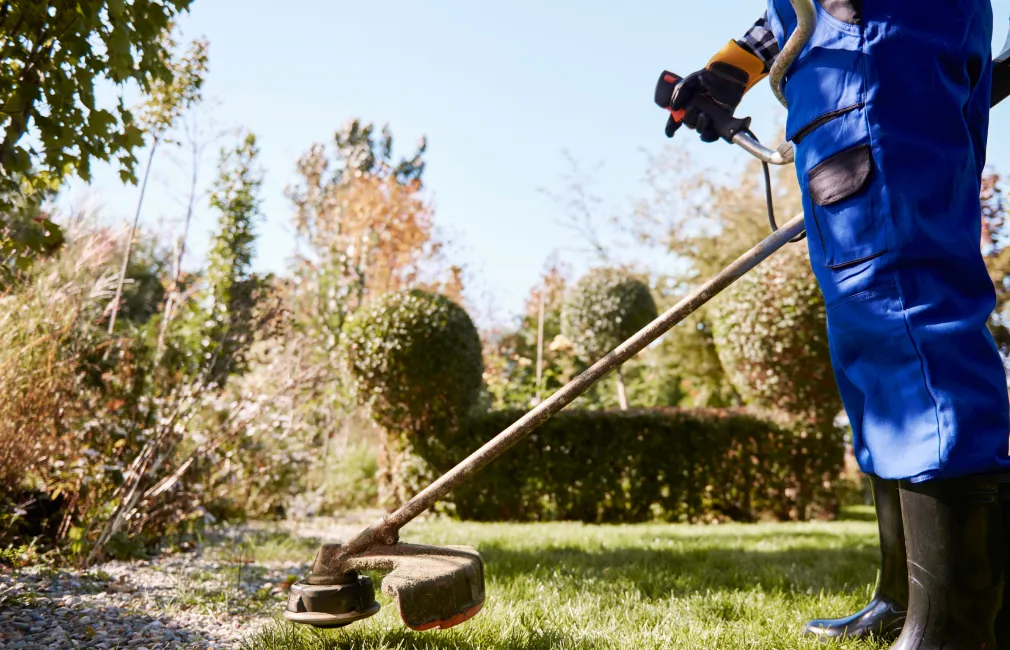
- String trimmer edging is appropriate for softer borders such as landscape bed transitions and decomposed granite pathways, but operators should avoid scalping turf crowns, which increases heat stress vulnerability
- Early morning scheduling (before 9:00 a.m.) is strongly recommended during summer months to reduce heat exposure for both workers and freshly cut turf tissue
- Post-monsoon cleanup is essential after heavy rain events, as runoff can deposit sediment along edge lines and redistribute clippings into drainage channels
- Irrigation should be coordinated so that edging occurs on a dry cycle day, preventing muddy conditions that compromise cut quality and increase debris spread
All clippings and soil displaced during edging should be swept or vacuumed from hardscape surfaces and collected rather than blown into streets, gutters, or adjacent natural areas.
What Neighborhoods Do We Serve Throughout Cave Creek, AZ?
- Rancho Mañana — Properties in this established community often feature mature bermudagrass lawns bordered by decorative block walls, where reflected heat intensifies edge desiccation and requires careful irrigation overspray management along hardscape transitions.
- Tatum Ranch — This master-planned subdivision includes extensive sidewalk and curb frontage that demands consistent mechanical edging to maintain clean turf-to-concrete lines across uniform lot layouts.
- Spur Cross Estates — Larger desert lots in this area frequently border natural wash corridors, requiring edging operators to prevent soil and debris displacement into protected drainage areas.
- Dove Valley Ranch — HOA-maintained common areas and individual lot frontages in this community benefit from regular edging cycles to meet neighborhood appearance standards along shared pathways and streetscapes.
- Desert Hills — Properties in this semi-rural area often feature mixed desert and irrigated turf landscapes on sloped terrain, where edging must account for grade changes and runoff direction toward retention basins.
- Cave Creek Unified Area — Older residential parcels near the town core may have irregular turf borders adjacent to gravel shoulders and unpaved edges, requiring adaptive edging techniques suited to non-standard hardscape conditions.